Blogs

Conversations Around Better School Management

Useful reads for principals, school owners, trustees, and administrators navigating operational decisions, digital systems, and everyday school challenges.

16 May 20264 mins

How to Choose the Right School ERP: A Practical Guide for Sc...

Every school owner eventually reaches the same moment. The spread...

17 May 20264 mins

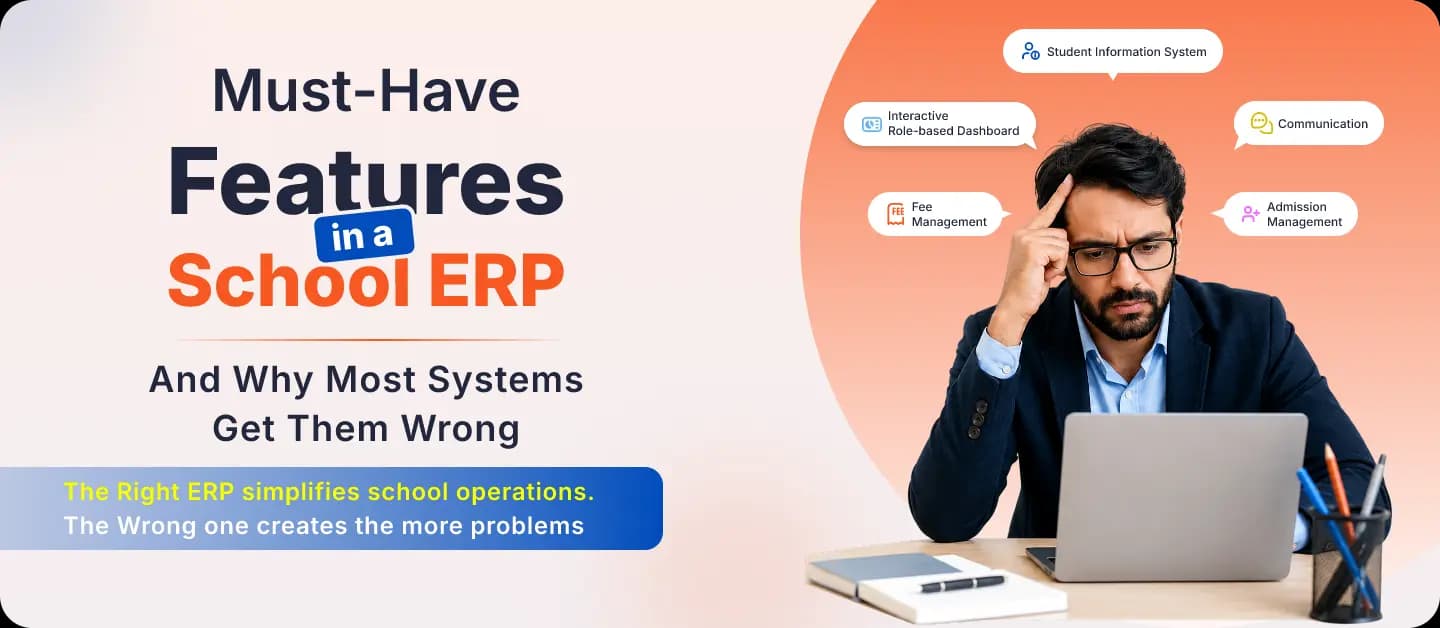
Must-Have Features in a School ERP - And Why Most Systems Ge...

Before choosing a school ERP, know which features actually matter...Read More

18 May 20264 mins

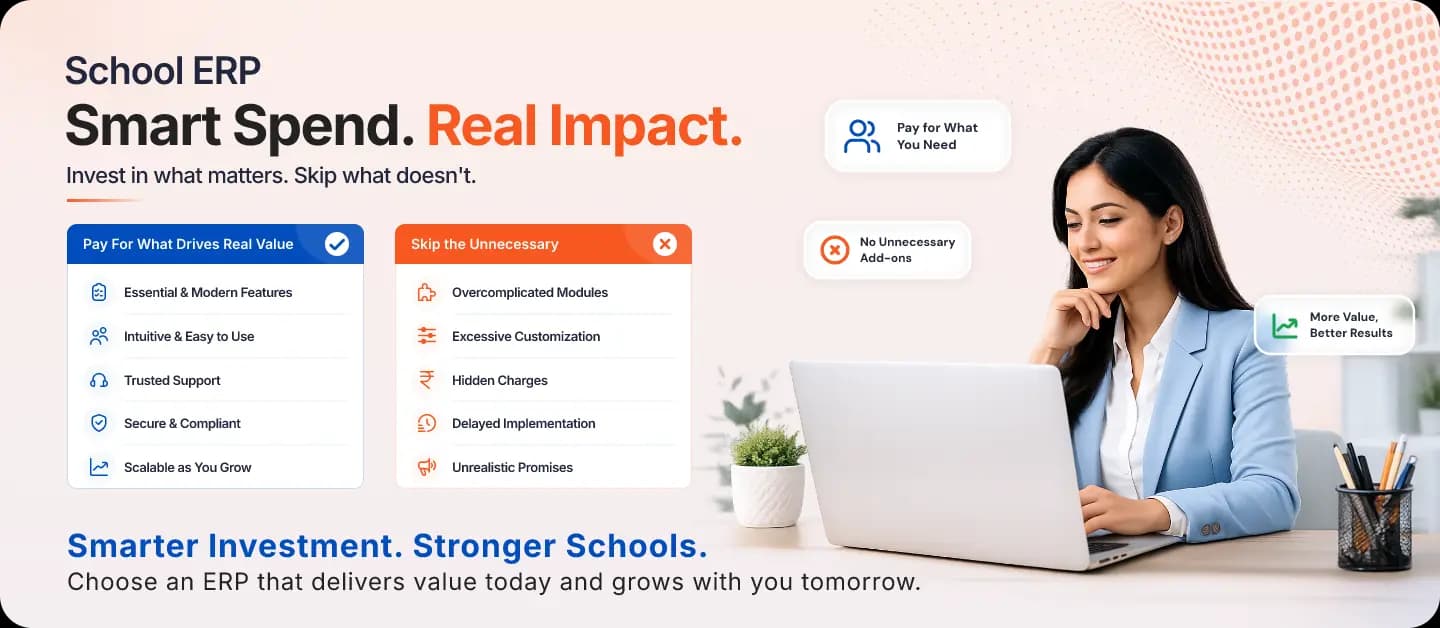
School ERP Value for Money: What You Should Actually Be Payi...

School ERP pricing in India varies wildly. Here's how to evaluate...Read More

19 May 20264 mins

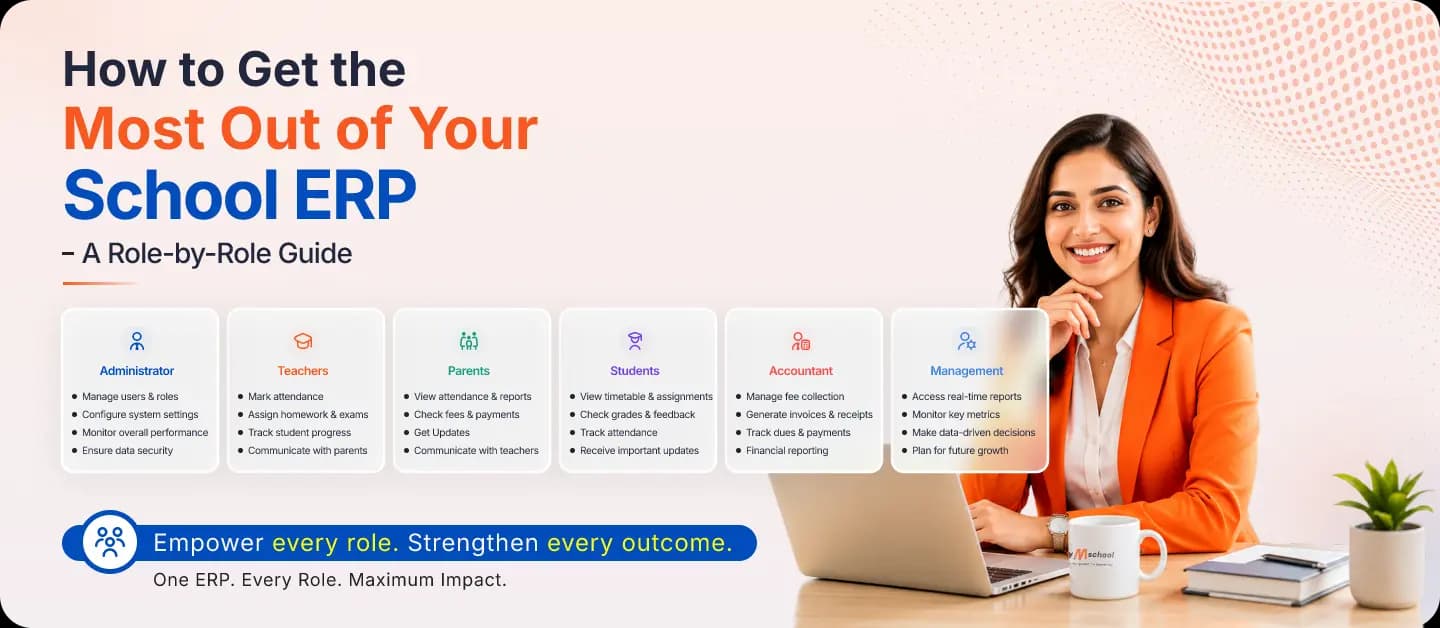
How to Get the Most Out of Your School ERP - A Role-by-Role ...

Implementing a school ERP is the starting line, not the finish. T...Read More

16 May 2026 • Read Time: 4 mins

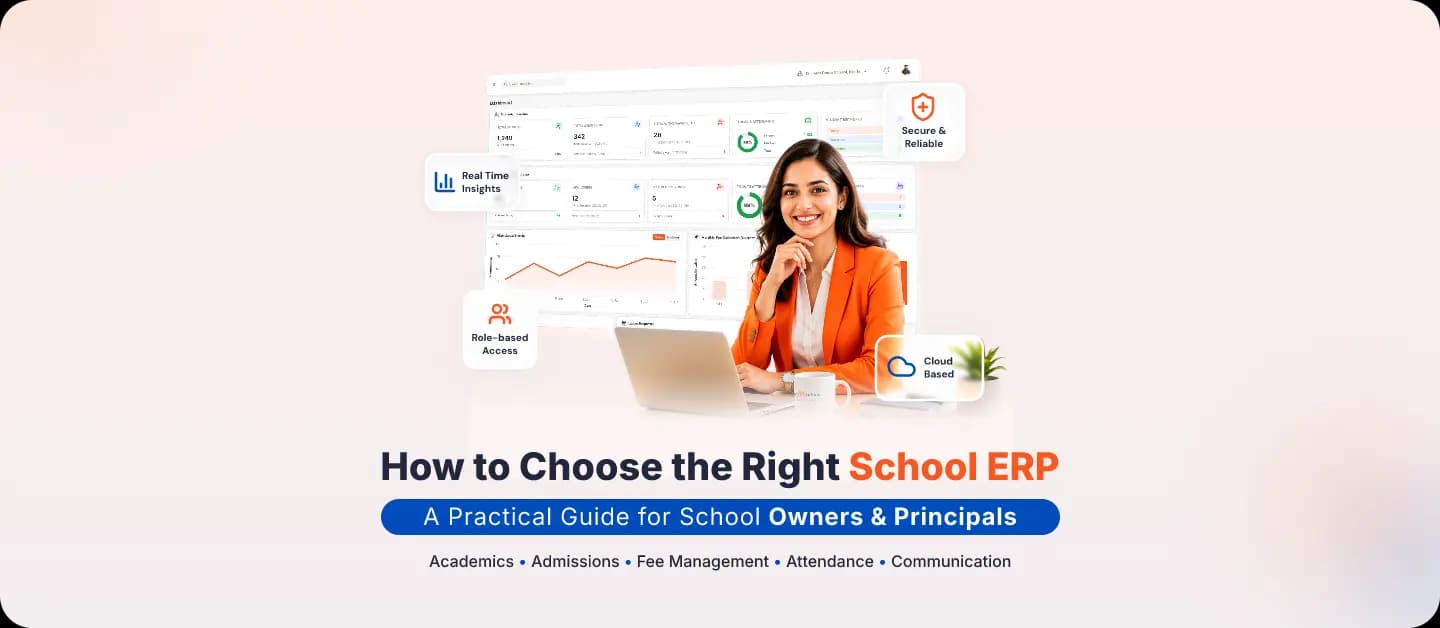
How to Choose the Right School ERP: A Practical Guide for School Owners and Principals

How to Choose the Right School ERP: A Practical Guide for School Owners and Principals

Every school owner eventually reaches the same moment. The spreadsheets are unmanageable. The follow-up calls are endless. The end-of-term reports take two weeks to compile manually. And someone says: We need an ERP. Then comes the harder part - choosing one. There are dozens of options in the Indian market, each promising to solve everything. So how do you cut through the noise and make the right call for your school? This guide is for school owners, principals, and trustees who want a clear, practical framework - not a feature checklist that reads the same for every vendor.

  • Step 1: Start with your actual pain points - not a features list

    Most schools make the mistake of starting with a list of modules they want. The problem is that every ERP vendor will say yes to everything on that list.

    Start instead with your three biggest operational headaches. Most schools in India tend to fall into one of these categories:

    • Fee collection that relies heavily on manual follow-up and physical registers
    • Attendance that takes teachers 15 minutes every morning and still generates errors
    • Admissions managed through phone calls, WhatsApp, and memory
    • Management that has no clear view of how the school is performing without asking multiple people.

    The ERP you choose should solve these first. If it can't handle your core daily operations elegantly, no number of additional modules will make up for it.

  • Step 2: Evaluate for usability - not just functionality

    The most common reason school ERP implementations fail isn't the software. It's adoption. Teachers stop using it. Admin teams work around it. The principal's dashboard goes unchecked.

    Before committing, ask: Can a non-technical staff member use this without calling support every week? The best school management software feels intuitive from day one, not after months of training.

    During any demo, watch how many clicks it takes to complete a common task like marking attendance, generating a fee reminder, or checking a student's record. If it takes more than three steps, that's worth noting.

  • Step 3: Check for end-to-end integration - not just a module list

    A school ERP is only as valuable as how well its parts talk to each other. Many platforms sell individual modules that don't actually share data. Your admissions module shouldn't be disconnected from your fee management system. Your attendance data should inform your management dashboard automatically.

    Ask the vendor: if a student is marked absent three days in a row, does the system automatically notify the parent? If a fee is overdue, does the accountant see it without running a separate report? Integration is what separates a real all-in-one school ERP from a collection of disconnected tools.

  • Step 4: Understand the true cost - not just the subscription price

    School ERP pricing in India varies significantly. Some platforms price per student per year, others by module, others by campus. The number you see in the first conversation is rarely the number you end up paying.

      Ask specifically about:
    • Implementation and setup costs
    • Staff training - is it included or charged separately
    • Support after go-live - is it a ticket queue or a real team
    • Costs for adding users, campuses, or modules as the school grows

    A genuinely affordable school ERP is one where the total cost over two years is transparent and reasonable, and not just the headline monthly price.

  • Step 5: Demand a demo that reflects your school - not a generic walkthrough

    Any ERP vendor can make software look good in a controlled demo. What you want to see is the platform working with your data, your school size, and your specific workflows.

    Before booking a demo, share some context: how many students, how many staff, how many branches, and what your biggest operational challenge is right now. A good vendor will tailor the demo to show you exactly how their platform handles that.

    If they can't do that - or won't - that tells you something important about how their support will work after implementation.

What does a good school ERP actually look like?

The best school ERP for a growing institution in India covers every operational area - academics, administration, finance, HR, and communication - without requiring a team of IT specialists to run it. It is comprehensive enough to be the only platform your school needs, and intuitive enough that every role, from the accountant to the front office staff, uses it confidently.

The right platform grows with your school. It doesn't charge you for features you don't need yet, and it doesn't break down when you add a new branch or double your student strength.

myMschool is a comprehensive, affordable, and intuitive school ERP built specifically for growing schools in India. If you're evaluating options, we'd rather show you than tell you.

Book a Free Demo
Conversations Around Better School Management | myMschool